How osteopathy can help neck pain
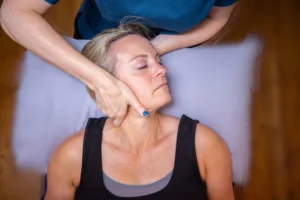
Osteopathy focuses on how the muscles, joints, and nervous system work together. When one area is restricted or overloaded, it can affect the way the neck functions.
Treatment may include:
- Gentle joint mobilisation of the neck and upper back
- Soft tissue massage to reduce muscular tension
- Stretching and articulation techniques
- Postural assessment and correction strategies
- Advice on ergonomics, workstation setup, and movement habits
- Personalised exercise or mobility guidance
The aim is to improve movement, reduce strain on irritated structures, and support the body’s natural recovery process.
Your first appointment
Your initial consultation will include a detailed discussion about your symptoms, lifestyle, and any relevant medical history. We then carry out a physical assessment to understand how your neck, shoulders, and spine are functioning together.
From there, we’ll explain what we’ve found in clear terms and discuss a treatment plan tailored to you. If treatment is appropriate, it will begin during the first session.
Neck pain from posture and modern life
A large proportion of neck pain we see today is linked to modern lifestyle factors such as screen use, remote working, and long periods of sitting.
Common patterns include:
- Forward head posture (“tech neck”)
- Rounded shoulders
- Reduced upper back mobility
- Overactive neck muscles compensating for weak postural support
Small changes in daily habits can make a significant difference when combined with treatment.
When to seek help
You should consider an osteopathic assessment if:
- Your neck pain has lasted more than a few days or keeps returning
- Pain is affecting sleep, work, or daily activities
- You notice stiffness that isn’t improving
- Headaches or shoulder tension are becoming frequent
- You’ve had a recent strain or injury
Early treatment often helps prevent symptoms from becoming more persistent or widespread.
Supporting your recovery
Alongside hands-on treatment, we often recommend simple, targeted changes that support recovery, such as:
- Gentle mobility exercises for the neck and upper back
- Ergonomic improvements at your workstation
- Movement breaks throughout the day
- Sleep posture and pillow adjustments
- Stress reduction techniques where relevant
These are always tailored to your specific presentation rather than a generic routine.